North Georgia is no stranger to severe weather. From intense spring thunderstorms producing straight-line winds and large hail, to the remnants of tropical systems dumping massive amounts of rain, our roofs endure a constant battering. When a major storm strikes, the damage to your roof can be immediate and severe, leading to leaks, structural degradation, and interior damage. Knowing how to identify storm damage and effectively navigate the homeowner’s insurance claim process is vital for protecting your property and your wallet. This guide will walk you through the necessary steps to take after a storm hits.
1. Identifying Common Storm Damage
After it is safe to go outside following a severe weather event, conduct a visual inspection of your property. Look for these common signs of damage:
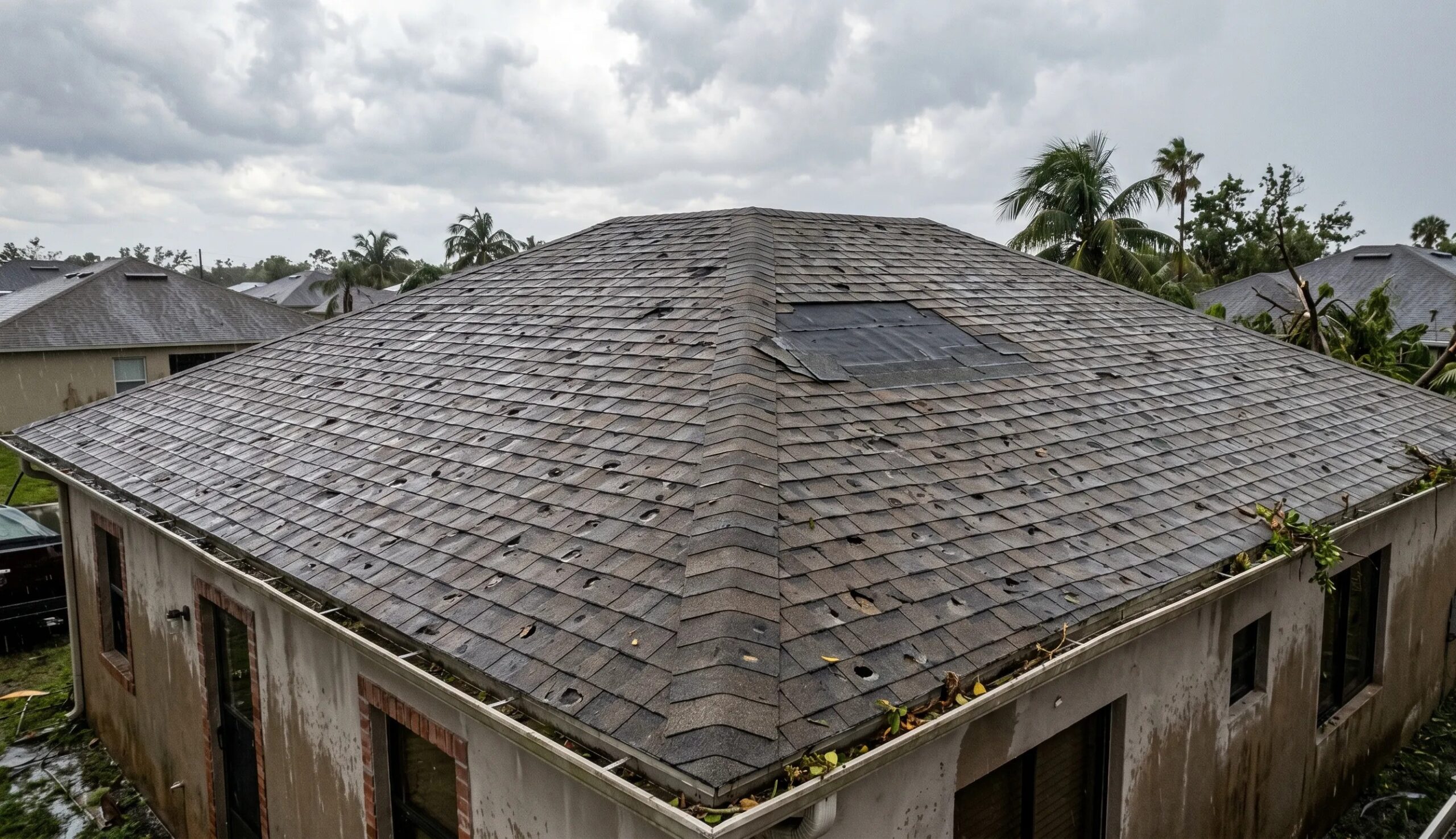
- Wind Damage: High winds can lift shingles, breaking the adhesive seal that keeps them watertight. Look for missing shingles, shingles that are folded back, or heavy debris (like large tree branches) resting on the roof.
- Hail Damage: Hail impacts cause “bruises” on asphalt shingles, dislodging the protective granules and exposing the asphalt mat beneath. These look like dark, circular dimples. Hail can also dent metal vents, gutters, and flashing.
- Water Damage: Check your attic and ceilings for water stains or active leaks, which indicate the roofing system has been breached.
2. Immediate Steps: Mitigation and Documentation
If your roof is damaged, your insurance policy requires you to mitigate further damage. This means taking reasonable steps to prevent water from continuing to enter your home.
First, document everything. Take clear, high-resolution photos and videos of the damage from the ground. Photograph any debris, damaged shingles in your yard, and interior water stains. Do not climb onto a damaged roof yourself; it is highly dangerous.
Next, contact a local, reputable roofing contractor to provide emergency services, such as placing a protective tarp over the damaged area. Keep all receipts for these emergency repairs, as your insurance will typically reimburse you for mitigation efforts.
3. The Insurance Claim Process Explained
Filing a roof damage claim can feel overwhelming, but understanding the steps can make it smoother:
- Contact Your Insurance Agent: Report the damage to your insurance company as soon as possible to initiate a claim. They will provide a claim number and assign an adjuster.
- Get a Professional Roof Inspection: Before the insurance adjuster arrives, have a trusted local roofing contractor inspect the roof. A professional roofer knows exactly what to look for and can identify subtle damage (like wind-lifted shingles) that an untrained eye might miss.
- The Adjuster Meeting: The insurance adjuster will visit your property to assess the damage. It is highly recommended that your chosen roofing contractor is present during this meeting. The roofer can point out the damage they found and ensure the adjuster fully understands the scope of necessary repairs, advocating on your behalf.
- Review the Estimate: The insurance company will provide an itemized estimate for the repairs. Review this carefully with your contractor to ensure all necessary materials, labor, and local code requirements are covered.
4. Understanding Your Coverage: ACV vs. RCV
It is crucial to understand how your specific policy pays out claims. Check your declarations page for these terms:
| Policy Type | Definition | Financial Impact on Homeowner |
|---|---|---|
| ACV (Actual Cash Value) | Pays the value of the roof minus depreciation based on its age. | Higher out-of-pocket costs. You pay the deductible PLUS the depreciated amount. |
| RCV (Replacement Cost Value) | Pays to completely replace the damaged roof with new materials of similar kind. | Lower out-of-pocket costs. You typically only pay your deductible. |
5. Beware of Scams
Storms bring out unscrupulous characters. Beware of contractors who knock on your door immediately after a storm, demand cash upfront, or offer to “eat” or waive your insurance deductible. In Georgia, it is illegal for a contractor to pay, waive, or rebate a homeowner’s insurance deductible. Always work with an established, local North Georgia roofing company.
Conclusion
Dealing with storm damage is stressful, but acting quickly, documenting the damage thoroughly, and partnering with an honest local roofing contractor will ensure your insurance claim is handled fairly and your home is restored to its proper condition.