Summers in North Georgia are notorious for their intense heat and oppressive humidity. During these long summer months, your air conditioning unit works in overdrive to keep your home comfortable, leading to skyrocketing energy bills. Many homeowners don’t realize that the roof is one of the primary culprits for heat gain in a house. A traditional, dark-colored asphalt roof absorbs a massive amount of solar radiation, transferring that heat directly into your attic and living spaces. However, by upgrading to energy-efficient roofing materials and technologies, you can dramatically lower your home’s cooling costs and improve your comfort.
Understanding “Cool Roofs”
The concept of an energy-efficient roof—often referred to as a “cool roof”—revolves around two primary properties:
- Solar Reflectance (Albedo): The ability of a roofing material to reflect the sun’s visible, infrared, and ultraviolet rays away from the building, rather than absorbing them.
- Thermal Emittance: The ability of a material to release any absorbed heat back into the atmosphere quickly, rather than transferring it downward into the building.
A high-quality cool roof excels at both, keeping the surface temperature of the roof up to 50 degrees cooler than a traditional dark roof during the peak heat of a Georgia summer afternoon.
The Best Energy-Efficient Roofing Materials for Georgia
1. Metal Roofing
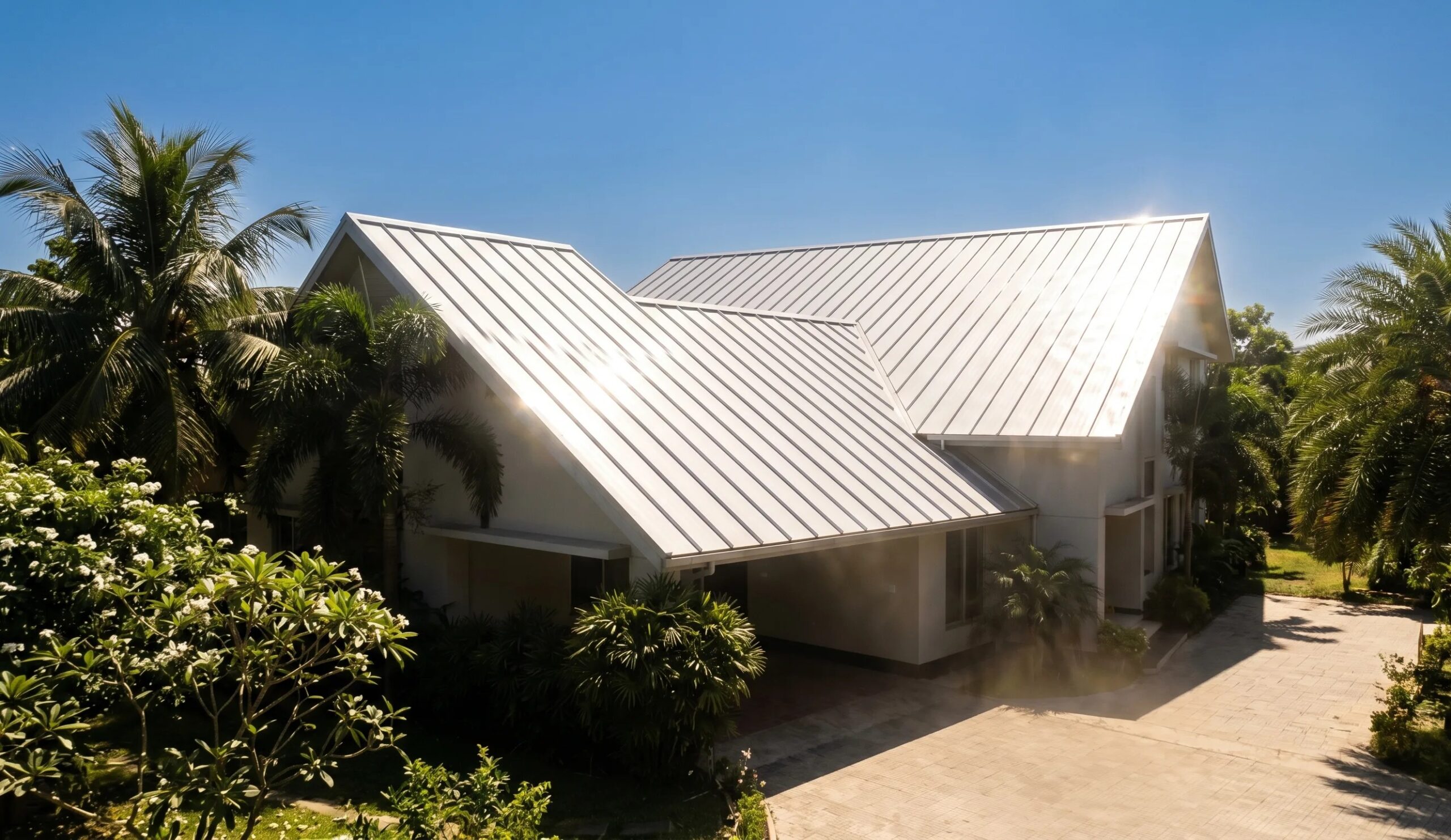
Metal roofing is one of the premier choices for energy efficiency. Modern metal roofs are treated with highly reflective, “cool-color” coatings that bounce solar radiation back into the atmosphere. Because metal has a low thermal mass, it also releases any heat it does absorb very quickly once the sun goes down. Studies show that a properly installed cool metal roof can save homeowners up to 25% on their annual cooling costs.
2. Cool Asphalt Shingles
If you prefer the traditional look of shingles, major manufacturers now produce specialized “cool shingles.” These asphalt shingles are manufactured with specially engineered granules that reflect a higher percentage of the sun’s rays. While historically these were only available in white or very light gray, modern technology allows for highly reflective shingles in darker, more traditional colors that still meet energy efficiency standards.
3. Tile and Slate
While less common in North Georgia due to cost and weight, clay, concrete tile, and slate roofs are naturally energy efficient. Their heavy, curved shapes allow for excellent airflow beneath the tiles, preventing heat transfer, and their thermal mass helps regulate temperature fluctuations.
The Role of Color
Color plays a massive role in energy efficiency. Simply put, light colors reflect heat, and dark colors absorb it. If energy savings are your primary goal, opting for a white, light gray, or light tan roof will always outperform a black or dark brown roof. However, thanks to the advanced reflective coatings mentioned above, you no longer have to sacrifice aesthetics for efficiency.
Don’t Forget Ventilation and Insulation
Even the most reflective roof will underperform if the entire “roofing system” is flawed. Energy efficiency is a three-part harmony:
- The Roof Surface: Reflects the sun.
- Attic Ventilation: You must have a balanced system of intake vents (soffits) and exhaust vents (ridge vents) to allow the hot air that does enter the attic to escape continuously. Without airflow, the attic acts like an oven.
- Attic Insulation: Proper insulation on the attic floor acts as the final barrier, preventing any residual heat in the attic from penetrating the ceilings of your living spaces.
Financial Incentives and ROI
| Benefit | Description |
|---|---|
| Lower Utility Bills | Reduced reliance on HVAC systems drops summer electricity bills significantly. |
| Extended HVAC Lifespan | Because your AC runs less frequently, you reduce wear and tear on the equipment. |
| Extended Roof Lifespan | Cool roofs suffer less thermal shock and UV degradation, making the materials last longer. |
| Rebates | Energy Star rated roofing materials may qualify for tax credits or rebates from local utility companies. |
Conclusion
Upgrading to an energy-efficient roof is a smart, sustainable investment for homeowners in North Georgia. By choosing the right materials, utilizing reflective technologies, and ensuring proper attic ventilation, you can create a cooler, more comfortable home while enjoying long-term savings on your energy bills.